Hot and Cold Memories

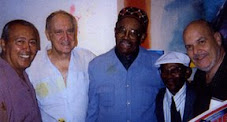
Vincent Livelli, far right, in 1948 at the Embassy Club, Plaza San Martin, Buenos Aires

Unless one arrives in a foreign country with letters of introduction, it is necessary to form new friendships and new experiences on your own.

In 1948, I showed up in Buenos Aires with plenty of friends whom I had met aboard the SS Argentina. Furthermore, these new friends were all high society. For example, Luiz Herrera, the world polo champion and race-car driver, who was the Maradona of his day, when polo was what soccer is today in Argentina. Also Samuel Jankelovitch, Evita’s impresario, and the Urquiza family, like our Kennedy clan. These folks met me at the dock in their Cadillacs when I would return to Buenos Aires, at a time when importing foreign cars was illegal. It was also a time when, since the British had built the nation’s railroads, the sight of British tweed jackets, cravats and English Leather cologne was in evidence everywhere. Within this circle of companions, in a hospitable country, I felt comfortably ensconced…that is, until I recently read the book Tango: The Art History of Love, by Robert Farris Thompson.

Where I had always received a warm Buenos Aires welcome, had I arrived cold, my present memories of those days would be quite different.

I was hanging out with the wrong crowd, listening to white (chongo) tangos of Carlos Gardel and frequenting clubs with the aristocratic atmosphere of the 1940s tango del salon. Forever in the upper-crust company of politicos and shifty club owners, I stayed at fancy hotels such as the Plaza, across from the Embassy Club on Plaza San Martin, owned by a Señor Kootcher. His elegant club was where we danced and dined, dressed tenue de soiree, on my nightclub tour of Buenos Aires that included a stop at the La Querencia club for some gaucho entertainment (malambo zapateado) and ending at the Gong for Americanized Argentine jazz. After the tour, I would finish off the evening at Cabaret Tabaris. This club was balconied and had a telephone at each table, which allowed you to connect with attractive unescorted ladies—and idea borrowed from European clubs.

Until I read Prof. Thompson’s Tango, I was unaware that there was another Argentina, where tango is to its citizens what rumba is to Cubans. During the time I lived in Havana, Cuban society was already beginning to more openly accept Afro-Cuban talent, whereas Argentina during that era of more British-influenced mores, was hiding the African origins of its national dance—its beating heart.

True, there were districts in Buenos Aires that were equivalent to the solares, patios and bateys of Havana, but I never knew of them. Never did I see Afro-influenced canyengue tango, where the male partner’s knees are bent with his torso pushed forward (this style is similar to Killer Joe’s hot rumba as he showed it to us at the Palladium). Nor did I enjoy black malambo, a dance of ritual purification that, like teeza maza, features explicit foot stomping as part of the tango. I never knew the ki-kongo power that drives the tango. I would not have feared entering the La Boca district, the city’s inner port with its bars and brothels, where tango was born.

Like being in love, faithful to one woman all my life, I only knew Afro-Cuban cultures, until I read that tango was born of the same mother: Mother Africa. Now my vocabulary includes yumba (“God’s command”), mufa (“bad luck”), mayembo (“trembling shoulders”) and other words added to my Afro-Cuban abrecuto quri dinga and babarabatibi coibi, etc.

Where I easily found Africa in Belize, not to mention Haiti or Boriqua, I feel I was cheated of memories that would today take me, like those I have of Cuba, to darkest Africa—the darker and hotter, the better.

Refugees in Havana


Havana in 1941 was one of the gayest cities on earth. With pristine beaches, lively music, tobacco, rum and beautiful women in abundance, it was a tropical paradise in the sun. Who could choose a better location to wait out the war in Europe?

In the upper-class sector of Havana, Vedado, about thirty families were living, not as Cuban refugees, but Jewish refugees. They had managed to escape the Nazi persecution but they lived from day to day in despair, with no means of support other than donations from Jewish charities. Many had endangered relatives in Europe. With little chance of returning to the ruins of their former homes, they survived as best they could. Not permitted to hold jobs in Cuba, they were desperate people.

Among the professionals, artists and businessmen, were many tailors whose wives took needle and thread in hand and made neckties for sale. During the Great Depression, this strategy had earned poverty stricken Jewish families money for food. The gift of a necktie for father at Christmastime arose then, during the birthdays and holidays, as a result of this activity.

Since Christmastime encouraged the greater display of decoration, these Christmas ties enlivened the male wardrobe, adding cheer to a sad time in America, and helped to break the somber style of dress in general in America.

In Cuba, however, the tropical climate and the absence of air-conditioning meant a need for loose clothing. An example is found in the typical Cubavera, a shirt with an unbuttoned neckline and no tuck-in at the waist. Even today, neckties are being abandoned in greater numbers around the world.*

When the Jewish refugees saw me passing by daily, they became more and more curious, and more suspicious of me. Could I also be a refugee, they wondered? I was approached by the salesman one afternoon, who had at last spotted a likely customer. Here was a gentleman who actually was wearing a tie in Havana!

It was an easy sale. I bought a tie since I could not only use one, but because the price was cheap. Besides, it was practical souvenir of Cuba to take with me when I returned home, to remind me of those who had lost theirs.


* Climate change?

Two Years in the Life


1939: Winter audition for Major Bowles Original Radio Amateur Hour, at Ed Sullivan Theater. Buyú, Julio Andino and Ruben Berrios, piano, two brothers on guitars. I managed the band (with rhumba shirt); clavero. No luck. Tried at Chin Lee’s Restaurant, near the Latin Quarter Night Club. No luck. No money.

1939: Went with Julio to meet Machito at the Half Moon (one flight up, Broadway and West 81st Street), after aforementioned audition for Major Bowles. Passed out from rum. Julio put me in the subway, Fort Hamilton local to the last stop.

1939: Met Katherine Dunham dancers and Jack Cole dancers and hung out at the Cuban Village amusement area, New York World’s Fair. As an understudy, I learned el diabolito and la mula and el sacraficio, Nanigo dances. I was fired for shooting dice in the dressing room.

1939: At the Café Latino, Greenwich Village, shot crap with Buyú in the cellar (now called One If By Land, Two If By Sea, an expensive restaurant).

1939: Met Nino “the Great” Yacovino. Joined his troupe, three couples. Worked at the Rhumba Casino at West-End, Long Branch, New Jersey. Did solo with my partner, Gloria Cook (“Cookie” was Al Jolson’s mistress). Have photos and clippings. Joined La Playa Dance Troupe and worked the Wonder Bar on Woodward Avenue in Detroit (great show town!). Met Raoul and Eva Reyes there. Cugat at the Statler Hotel in Detroit, on tour. Frank Sinatra was at Ross Fenton Farms in New Jersey.

1939: Stayed at the Kingsley Arms Hotel, Asbury Park, NJ, where I had my studio in the solarium and taught Rhumba.

1940–41: Received wire to go to Miami Beach to join Cuban Troupe, three couples, plus Pepito and Carmen at the Carrousel Club cum revolving bar, featuring the craze: La Conga! Taught dancers around Miami Beach hotels, in my own studios: Bali Club, Hotel National off Lincoln Road, and at the Tatem Surf Club (exclusive Christian “No Jews” policy). Also at Coral Gables Country Club (restricted). Orchestra Ina Ray Hutton, all-girl orquesta. Attended University of Miami; exchange scholarship to University of Havana.

Remembering the Village


Letter to archivist Henry Medina

Dear Henry:

Your interest in Greenwich Village shows me that you are an artist at heart. With me, it was an accident of birth that placed me here, fortunately. I say fortunately because this is where I feel I most belong. If I could have had a choice, it would have been here or Paris, so much so that when I meet a Parisian, I feel I have much in common with him.

This is where I awoke from infancy when my mother took me to the window to show me snow in the backyard. My first view of “the world” was a beautiful one. Because the Ninth Ward (as Greenwich Village was once called, in the early 20th century) was so overrun with violence from street gangs, it was unsafe for me to play in the street. Furthermore, since we were landlords, there was much envy and hostility toward my family. I was only allowed out in the company of my grandmother or my uncle, on their daily visit to St. Anthony’s Church (Shrine), that my grandfather was instrumental in establishing on Thompson Street. He hoped to help the community and at the same time increase property values in the neighborhood. Today, his dream is realized, I’m happy to say.

He admired and spoke often of the Germans, a more settled element in the city. “A walk in G.V.” referred to row houses north of Washington Square Park. These stately mansions were called, in my grandfather’s time and even today, the Rhinelander Estates (now owned by NYU). He had traveled all over Germany as his old passport shows, and was in the piano-string business at 5 Bedford Street, with a German family. He may very well have built the hurdy-gurdy organ that he’d carried around Europe as a musiker. He owned a stable and opened a bar to sell German beer. In those days, the Genoese families in the Village drank beer more than wine, since it was more readily available. When I was 9 or 10, I would go for beer for the men working on West Broadway (now Soho), bailing rags and paper. They called such young children “go-fors” in English, even though the men working the huge compacting machines were all Italian-Americans.

My father was a journalist, having been born in New York and having graduated high school. He began his newspaper career as Arthur Brisbane’s office boy and worked his way up to investigative reporter with the New York World and the New York American, both Hearst newspapers. He may also have worked at the old New York Evening Post (the editor was a certain Mr. Swope).

The Village at this time was very crowded with poor immigrant families. Walking to PS 102, on Varick Street, I would be bullied, and sometimes spit on from tenants up at windows who identified me with my landlord family. Soon I was not allowed the natural pursuits of young kids and was kept tied to the fire escape. A cousin older than I would walk me up to Central Park and back, especially in the winter to ice skate on the lake. He would have to carry me home on his shoulders since it was quite far for me to walk. He would skate with me on his shoulders as well. His mother, my aunt Tessie, and my unmarried Uncle John, my grandparents, and my mom and dad were all obliged to live in the building. For safety, my dad moved me and Mom back to Brooklyn when I was 10 or 11. I had originally been born in Brooklyn, at a time when all the apartments in my grandfather’s building at 117 Sullivan Street were taken. As soon as a vacancy occurred, when I was 6 months old, my dad had us moved into my grandfather’s building, so I consider myself a Villager.

I remember what is now the Jefferson Market Courthouse Library, when it had a women’s prison attached to its property. That part was torn down around 1960, especially since the ladies would be yelling down from the barred windows at friends and passersby in the street and along Sixth Avenue. I played, jumping in the mountains of sand being excavated while they were building the Sixth Avenue subway, coming home all sandy. My real playground was Washington Square Park, where I was taken daily after visiting Pompeii Church and St. Anthony’s, to ride my tricycle…the envy of the neighborhood kids whose families could not buy them one. We sat by Garibaldi’s statue, since my father was a “Garibalino,” instrumental in raising money for the statue. He came to America in 1861 to join Garibaldi, who was living on Staten Island at that time, prior to leaving to fight in Peru against the Spaniards. He bought acres of empty land in Rego Park and Forest Hills but sold it in order to finance his son, Dominick (my uncle), who was running for mayor of Hoboken, where there was a very large community of Sicilians (who were being oppressed by the Irish political machine and made to work for a dollar a day paving streets). My uncle lost the election, and we became much poorer over time.

Today the rent for an apartment in what was my grandfather’s building on Sullivan Street is averaging $2,000 a month. Next to this building, I remember outhouses before there was central plumbing. The people called them “back houses,” as the historian Barry Lewis mentions. In Italian, “bacahows” or “cessos” (the second word comes from “cesspool” in English). Today you enter a tight alley to go into the backyard of the two buildings, where now there is a small cottage. This occurred in many instances where the space was used to build cottages where formerly there were crude toilets. Even as late as the 1960s there was a public toilet (men and women) around 17 Perry Street. Most of the kids were poisoned eating lead paint chips, as they still are today in poor neighborhoods in the Bronx and elsewhere in the city.

My mother loved dancing, and spoke of the cabaret named the Black Cat (I think it was on West Third Street, in the 1920s). Mori’s was the popular restaurant on West Fourth Street in 1945, which had a fountain in the interior yard. MacDougal Street was lined until just after the Second World War with private mansions with iron balconies and railings. The Provincetown Playhouse was there in 1946 through 1948, as was a nice club called Salle de Champagne, where guests sat on cushioned seats and drank champagne. A jazz spot named George’s was at the northeast corner, at 69 Bleeker Street and Seventh Avenue, and then, after the war, there was Louie’s on West Fourth and Barrow (today the One if by Land restaurant is located down the street).

In the hot summers when I was a child in the Village, horses would die in the streets, cops would shoot them, flies entered windows before screening, and recalling stable smells keeps me from liking horses to this day. I lit the gas lamps in the hallways of my grandpa’s building, while carried on my dad’s shoulders. The two communal toilets on each floor served three families and were the coolest places to escape the hot apartments. My dad bought me clothes on Orchard Street and, at 8 years old, I was always wearing a hat, which I took off to greet people as I bowed to them. My best friend was the son of the Jewish candy-store owner on Prince Street, when I was 9. My childhood in the Village was proper and not difficult compared to other kids, many of whom went to jail. Today, my Village is an abode of memories that will inhabit me forever.

“Nague, Nague, Nague”


Machito would begin the Rumba Matinees at La Conga singing his theme song that immediately identified his Afro Cuban roots. This was a dividing departure from the “Allá en el Rancho Grande” format that Anglos had become accustomed to hearing from orchestras. Machito blazed a trail, along with Noro Morales who preceded him at La Conga but who played more bolero and a more toned-down rumba, so that when Machito broke onto the scene, it was a momentous turn in sound: more the real thing that had been waiting in the wings.
Mario Bauzá’s insistence on a jazz hookup is understandable in terms of improved Anglo public exposure and money-wise, as well as a musical innovation. But Machito had his ears and his pulse tuned to the minority, his loyal following at La Conga that barely tolerated the mixture that was forced upon them by Bauzá. I recall the dancer and listener reaction around the room as Mario and Machito acted uncomfortably with each other on the bandstand, with Mario struggling to get the band behind his efforts as he stood off to the right-hand side, leading rather desperately (and rather obviously to us all) while Machito stood in front of the band playing along with his maracas with cool confidence in his Afro-Cubanos. Perhaps the orishas were on his side, and he seemed to know it—and so did Mario.

Machito correctly understood the reaction of befuddled dancers when Mario sprang “Tanga” on them. They had come to dance, not to stumble over Latin jazz. Jazz is great for the brain and the ear, but Latin is for the feet and the heart. Minus dance floors, the Blue Note, Birdland and the old Granada in the Village never enjoyed the crowds of the Copa.

One can call jazz sophisticated or (forgive me) a subtle, contrived snobbery that is at home in vaporous, smoke-filled darkness, demanding respect from its audience. Latin is for extroverts, for public spectacles and displays of exuberance. It applauds mobile ability—but where would it be without the dexterity of all the musicians? Jazz is musical embroidery, ingenious, involved in amazing trickery. Both are infectious with shock potential and as creators of artifice, both can cleanse us of demons while employing intriguing style. Both transmit a lingering presence—a rush, a charge, an afterglow, a satisfaction like an intoxicant that enlarges our spirits.

Perhaps most of all, jazz, Latin, Afro, et al, are best described as testimonials to one’s artistic and very human individuality. They are demonstrations of mankind’s God-given sensitivity, and of his struggle to excel. Music is not only a fact of the natural world—as sentient creatures with creative instincts, it is embedded in all of us, like love.

When I met Graciela in 1941, playing with Anacaona in front of the Capitolio, I knew that her Afro sound would someday reach Broadway. It was Cugat and Miguelito Valdez who brought “Babalu” to America—first heard at the Beachcomber in Miami Beach, in ’41 and then in ’42 at the Waldorf-Astoria—and first teased the ears of those of us who wanted more. Machito filled that gap when he shook off Cugat’s refinement, which had constrained the authentic (often nañigo) roots, and finally pioneered the remarkable Afro-Cubano phenomenon. We can compare Cugat’s motivation, a financial consideration, with Arthur Murray’s manipulation of the authentic rumba, as well as Bauzá’s surrender to jazz influences. Music sounds “right” when separated from money, as in the desperately poverty-stricken areas of Africa where it comes from the soul and not from the pocket. That holds true for jazz as well as for Afro. All musicians are brothers, but not all music is harmonious. Music is a large familia that doesn’t always get along, even for reasons other than money. It is saddest when music itself, to soother of beasts, is the cause and the public suffers.

The last time I sat with Machito and spoke of the happy times we knew, it was at Roseland where he, in the late ’70s, played to a small crowd of mostly senior citizens and old widows—the music that they could manage to dance to. The gloom that was evident weighed on us. Latin jazz and hip-hop would be coming to Broadway. Bauzá had triumphed—but back in New Orleans, you can still hear some of the folks singing “Give me back that old time rhythm.”

Vince in the Brooklyn Rail

Read the feature story by Alan Lockwood about Vincent Livelli -- "Man of the Village, Man of the World." It appeared in the Brooklyn Rail in April, 2008.

Salsa on the High Seas (Salsa Sobre las Olas)


Two octaves below A-major, the ship’s horn of the Fiestamarina signals the sailing from Miami. Un crucero con sabor latino, con tumbao y rumbon, nace un nuevo concepto en la industria maritima, un idea que iba cerciendo paso a paso.
Music has accompanied man’s voyages throughout history. The major naval forces of the world all have their bands; Tito Puente played in one. Roman galleys rowed to the beat of a drum, and King Ludwig floated on a barge in his castle with Richard Wagner. Back in 1807, opulent pleasure boats plied the New York waterways featuring cotillions with large orchestras aboard, ending with fireworks. On whaling ships during months-long hunts, seamen danced to chanties. The French ship Jean Mermoz featured symphony cruises. In Venice, gondoliers row to arias. Circle Line boats have cruises called “Mambo on the Hudson” and “Merengue on the Hudson,” and in Paris the bateaux-mouche sail until dawn playing porros and excellent salsa. From the lone accordionist on the ferry crossing New York Harbor, to the Fiestamarina, with its musical emphasis and Latin musical heritage—a powerful combination. Salsa sobre las olas…salsa on the high seas.

Back in 1948, three ships called the Good Neighbor Fleet sailed from Pier 32, New York, on 38-day cruises to South America. The orchestras of the Brazil, Argentina and Uruguay struggled with Latin rhythms. They played fox trots from New York to Port of Spain, calypso from Trinidad to Bahia, then samba as far as Santos and then from there to Buenos Aires…the tango. Along the coasts of the Caribbean islands, gyroscopic proto-salseros danced on the waters that served as the ideal conductors for the electricity found in Latin music.

It was after the passengers retired that the true Latin spirit manifested itself in the form of the crew conjunto that formed every night on the aft end of the ship. The espantaneo-type band might feature such artists as “Hot Lips” Garcia from El Barrio, and Doroteo Santiago, who popularized “Amor Perido,” “Tu No Comprendes” and “Dolor Cobarde,” right from the Happy Boys at the Park Plaza on 110th Street. Earlier each evening, Hot Lips had played “Malaguena Salerosa” to call the passengers to dinner each night. His trumpet replaced the gong, mournfully echoing in half-time down the long companionways of the ship, from deck to deck.